Check the Drying Rack’s Loaded Room Route
Our guides are independently written. Some shopping links may earn us a commission when identified as affiliate links, at no extra cost to you. Read our disclosure.
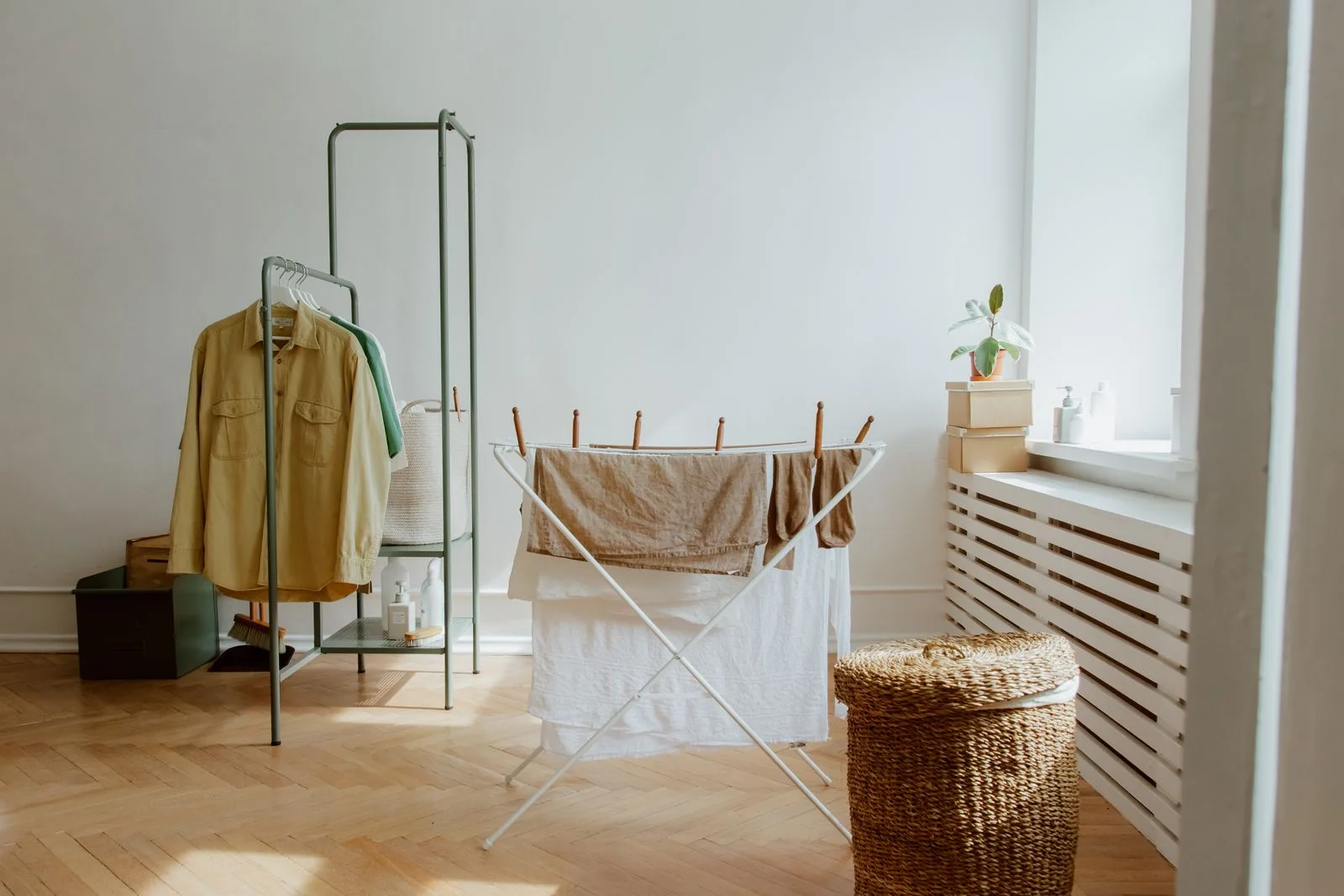
An empty drying rack is a poor substitute for a room-layout test. The useful question is whether the same doors and walking lines remain available after the longest ordinary garments have been hung. Run one careful comparison with the actual equipment before settling on a permanent drying position.
Draw the room’s non-negotiable lines
On a simple sketch, mark the doorway, regularly opened cupboards and the route used to cross the room. Include a chair pulled out from its table if that happens while laundry dries. These are existing uses of the space, not inconveniences to be suspended for every load.
Choose two possible rack positions outside those lines. Check the equipment's setup guidance and the room's suitability for the task. Avoid locations that interfere with heating equipment, electrical items or required ventilation, and keep exits unobstructed.
Compare the equipment before adding clothes
Open the rack completely in the first suitable position. Include wings, feet and any projecting support. Walk the normal route and open the relevant door while the equipment is empty. If the frame alone creates a conflict, eliminate that position rather than expecting smaller garments to solve it.
Repeat in the second position. Note which side can be reached for hanging and collection. A rack pressed close to a wall may appear compact because one side has effectively stopped being usable; count that loss when comparing the two layouts.
Add the garment that changes the outline
Use a representative suitable item from the actual laundry, following its care requirements and the rack's intended loading. Notice where its sleeves, hem or folded section extend beyond the metal frame. The new fabric boundary is the one the room must accommodate.
Repeat the door and walking checks without moving the loaded equipment. Do not rely on someone remembering to squeeze past a sleeve or step around an unexpected corner. If a necessary door cannot operate normally, change the position or reduce the load through an appropriate alternative drying arrangement.
Choose the lower-effort layout
Compare what each position demands over the full drying period. One may preserve the route but require reaching across the rack; another may make collection easier while losing access to a cupboard. Choose the arrangement with the fewest repeated compromises, keeping suitable drying conditions central.
If neither location works, the answer may be a different drying schedule or equipment suited to the space, rather than forcing the current frame into a passage. Measure before buying and keep the actual garments in the capacity estimate.
Record the successful position in a short household note if the rack is shared. When the load is ready through its proper care process, clear it to its destination and return the equipment to suitable storage. The test is complete only when the room can resume its other roles without a second pile replacing the rack.
Related reading
Ready Clothes Need a Real Return Point, Make a Small Clothing-Care Queue for the Weekend.
More considered choices, fewer impulse buys.
Read our editorial standards →