Compare One Day Dress With Two Shoes You Already Own
Our guides are independently written. Some shopping links may earn us a commission when identified as affiliate links, at no extra cost to you. Read our disclosure.
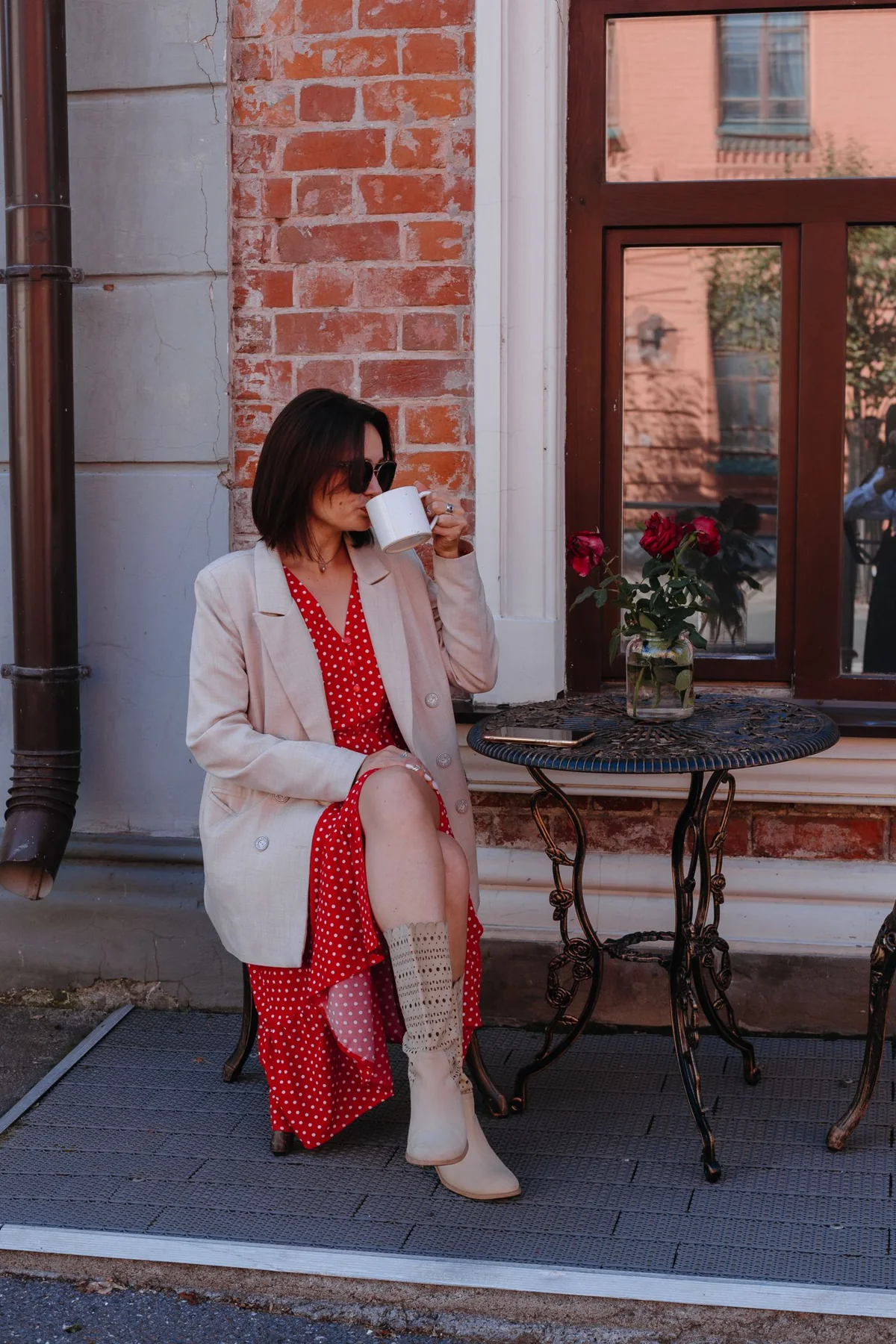
Keep the dress constant
When a familiar dress seems to need a different pair of shoes, compare options already owned before shopping. Keep the dress and other layers constant so the footwear is the actual variable. Choose two suitable pairs that have realistic roles in your day rather than treating every shoe in the wardrobe as a contender.
Name the occasion and the activities involved. A seated café visit and a day involving several journeys create different practical questions. There is no universal heel height that makes a dress correct, and a pleasing photograph cannot establish personal comfort.
Look at the complete outline
Compare each pair with the dress's actual length and shape. Notice the space between the hem and shoe, the visible color and the relationship to any outer layer. Describe what you prefer in ordinary terms rather than assigning a rule to your body shape.
Use a mirror position that shows the whole outfit. If a suitable private photo helps, keep the angle consistent. Different poses or cropped feet can make the comparison misleading, especially when the intended difference is relatively small.
Include walking and sitting
Try the ordinary movements relevant to the occasion within the shoes' intended use. Notice whether the dress catches, needs repeated adjustment or behaves differently with either pair. Wear the hosiery or socks actually intended for the combination.
Our city-day footwear guide supports the separate shoe decision. A pair selected for a different job should not be pressed into this outfit simply because its color matches. Keep product condition and your own experience with the shoes in view.
Compare the retained layer
Add the jacket or cardigan that will genuinely accompany the dress. The footwear can change how the complete combination appears, even though the dress itself stays the same. Decide whether the outfit feels coherent to you without buying another accessory to explain it.
Our light-layer guide supports a useful outer layer. Keep the comparison focused: changing shoes, bag, coat and jewelry at once makes it difficult to know which change helped.
Give each successful version a job
If both combinations work, note their different roles rather than choosing a winner. One may suit a familiar lunch plan while another suits a different agreed occasion. Keep the note brief enough to consult when getting dressed.
If neither serves the intended day, consider another existing dress or outfit before deciding the wardrobe needs new footwear. A useful comparison can reveal a mismatch in the occasion plan as readily as a gap in the shoe collection.
Dress-and-shoe questions
Must the dress always be worn with one shoe height? No. Compare suitable combinations for your real activities.
Can a photograph decide comfort? Include your own ordinary movement and experience with the actual pair.
What if both options work? Keep their different useful roles rather than inventing a single rule for the dress.
More considered choices, fewer impulse buys.
Read our editorial standards →