A Wardrobe Shelf That Shows the Clothes You Use
Our guides are independently written. Some shopping links may earn us a commission when identified as affiliate links, at no extra cost to you. Read our disclosure.
Start with the shelf's current role
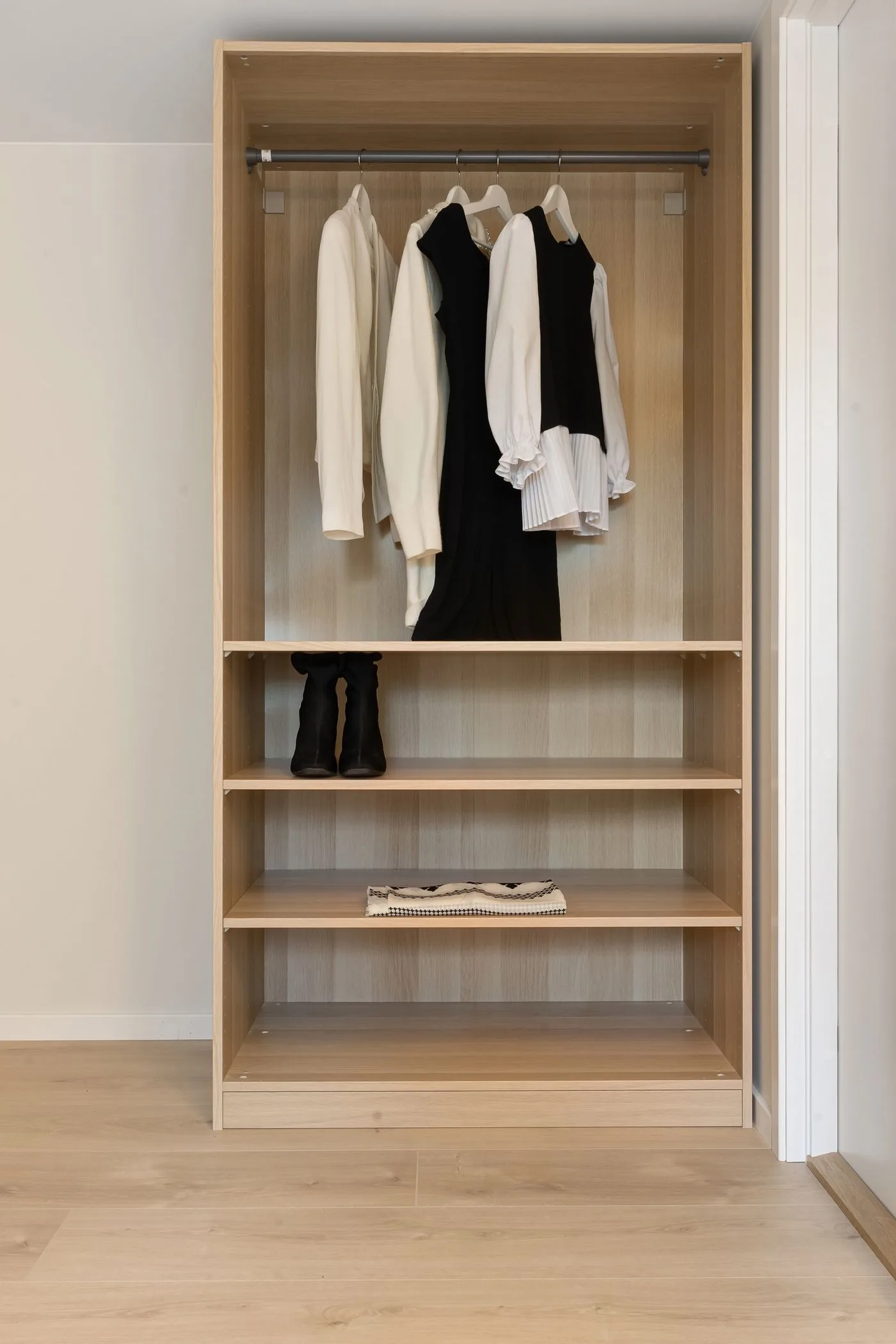
A wardrobe shelf can hold everyday clothes, occasional pieces and items waiting for a decision. Before changing the arrangement, name the group that needs the clearest retrieval. Use the actual week ahead rather than an idealized wardrobe photograph as the reference.
Keep the review limited to your own belongings or an agreed shared group. Moving another person's clothes without permission can make an attractive shelf less useful to the household. A practical arrangement should be understandable to the people who use it.
Make the active group visible
Choose the suitable ready garments you actually reach for and compare their current storage. A deep stack can conceal lower items, while several small piles can become hard to distinguish. Use the space and garment requirements you really have, not a container system chosen before the contents were understood.
Follow each garment's appropriate care and support needs. Do not fold or hang an item against its requirements simply to create uniform stacks. The visible arrangement should serve the clothes as well as the shelf.
Separate uncertainty from everyday storage
An item you are still deciding about needs a bounded next step, not a permanent place on top of the active group. Name the question: fit, a missing outfit role, repair or care. Keep it distinguishable until that question is resolved.
Do not treat every uncertain piece as a reason to discard something immediately. Some may have a real occasional or sentimental role. Give that role a suitable place rather than making everyday retrieval work around an unresolved pile.
Compare the shelf through one week
Retrieve a garment normally and notice what must move. If using one knit disturbs several unrelated stacks, the shelf may need a smaller active group or a different suitable arrangement. Return ready garments clearly after appropriate care.
Keep a short record only where it answers a real question. A note naming the garments used with a particular outfit can be useful; a detailed inventory of every item may create more work than the shelf problem requires. Choose the lightest method that keeps the current group understandable.
At the end of the week, identify the specific difficulty that remains. A hidden lower garment, an overfilled shelf or a repeatedly unfinished care item each needs a different response. Another organizer is not automatically the answer. The useful shelf shows what is actually available, keeps pending decisions from covering ready clothes and provides a return place that can be maintained. That gives the next outfit choice a clearer starting point without turning a modest wardrobe edit into a complete clear-out.
A practical weekly check asks which ready garment was hardest to retrieve and why. Record the obstruction, not a general wish for more wardrobe space. The next edit can then address the actual stack or pending group that caused it.
Related reading
Give an Uncertain Wardrobe Piece One Realistic Job, Use One Weekend Hour to Test the Outfits Already in Your Closet.
More considered choices, fewer impulse buys.
Read our editorial standards →