Make One Pattern Lead a Sofa Group
Our guides are independently written. Some shopping links may earn us a commission when identified as affiliate links, at no extra cost to you. Read our disclosure.
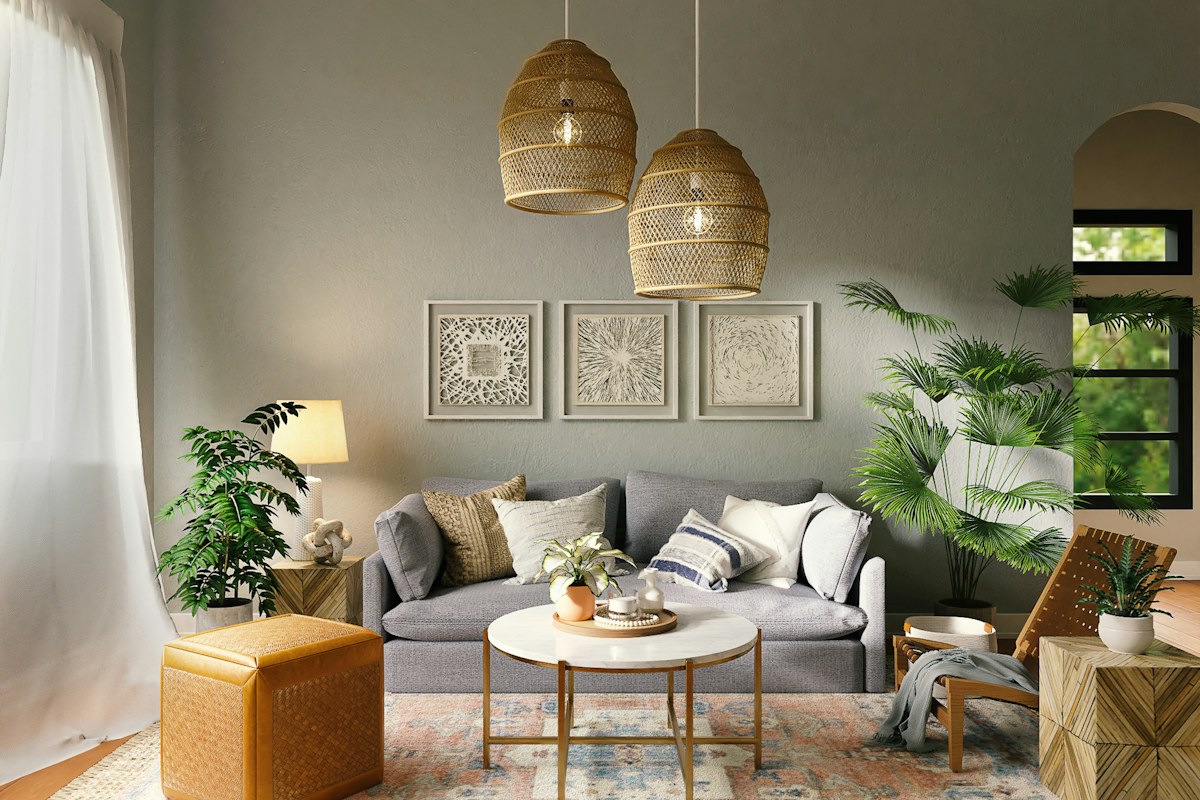
Count the patterns already visible
A sofa group includes more than its cushions. A rug, curtain, framed print and woven shade can all add pattern or repeated texture. Begin with the ordinary room view and identify the strongest visible feature before choosing another textile.
Look from the doorway and from the seat opposite the sofa. Fine details can disappear across the room, while a large print remains distinct. The leading pattern should be the one you actually see and enjoy in that complete view, not simply the newest cushion.
Choose one feature to lead
You might let a patterned cushion stand against plain upholstery, or keep the sofa quiet while the rug supplies the print. Name that choice before moving other pieces. It gives the edit a clear purpose and prevents every surface from trying to become the main detail.
The other patterns do not have to vanish. They can remain quieter through smaller scale, lower contrast or less visible area. Compare the actual retained pieces rather than relying on a formula that treats every room and fabric alike.
Build the quiet version first
Set aside one optional printed textile and look at what remains. Keep the cushions and throws genuinely needed for ordinary comfort in suitable places during the comparison. A useful arrangement should still leave the seating people actually use.
If the group becomes clearer, bring back one piece at a time. Notice the point where the patterns begin to compete. This controlled edit tells you more than adding several new coordinating textiles and hoping their shared colors settle the room.
Compare color without exact matching
A small repeated tone can connect patterns of different scales. Use the physical textiles in normal light to judge it. An exact screen match is neither reliable nor necessary if the retained pieces already have a relationship you enjoy.
Check material care and intended use before choosing a decorative textile for everyday seating. A striking surface may have a routine you do not want to maintain. Appearance should not be the only reason an unfamiliar piece enters the active sofa group.
Photograph the smallest arrangement that gives the selected pattern a clear role. Name the actual pieces so future additions have a reference. If another cushion is considered later, ask what it adds to that group rather than whether it is attractive alone. One leading pattern can make a corner feel more understandable without making the room plain. The useful balance comes from a clear focus, enough quiet around it and retained objects still serving the people who use the sofa.
Keep the strongest retained print in place and compare the group with one quieter cushion. If the main pattern becomes easier to see, the edit succeeded without adding another design. Let that version become the reference for later choices.
Related reading
A Calm Sunday Reset for a Busy Week, Choose the Yellow Chair’s Ordinary Evening Role.
More considered choices, fewer impulse buys.
Read our editorial standards →