Make a Small Balcony Feel Like a Morning Corner
Our guides are independently written. Some shopping links may earn us a commission when identified as affiliate links, at no extra cost to you. Read our disclosure.
A balcony does not need to become a miniature living room to be useful. One comfortable seat, a stable place for a cup and enough space to open the door can create a pleasant morning corner. The challenge is resisting furniture that looks small online but consumes the whole floor once it arrives.
Start by measuring the usable space, including the swing or slide of the door. Note where water drains and where everyday access must remain clear. Check your building’s rules before attaching objects, adding screening or choosing anything that affects the exterior. The practical limits belong at the beginning of the plan, not after delivery.
Choose the activity first
Picture ten ordinary minutes outside. Are you drinking coffee, reading a few pages or talking with another person? A reading chair needs different support from a stool used briefly while watering plants. If two people rarely sit outside together, buying two bulky chairs may waste the space that would make one chair comfortable.
Use a temporary seat to test the location at the time you expect to use it. Notice direct sunlight, wind, noise and visibility from nearby windows. A spot that feels appealing in the afternoon may be uncomfortable at breakfast. Move the seat before committing to a layout.
Compare furniture by its open dimensions
Folding pieces can be useful, but they still need room when unfolded. Check seat width, overall depth and the space required to sit down and stand up. A chair that technically fits may leave no room for your knees once a table is added.
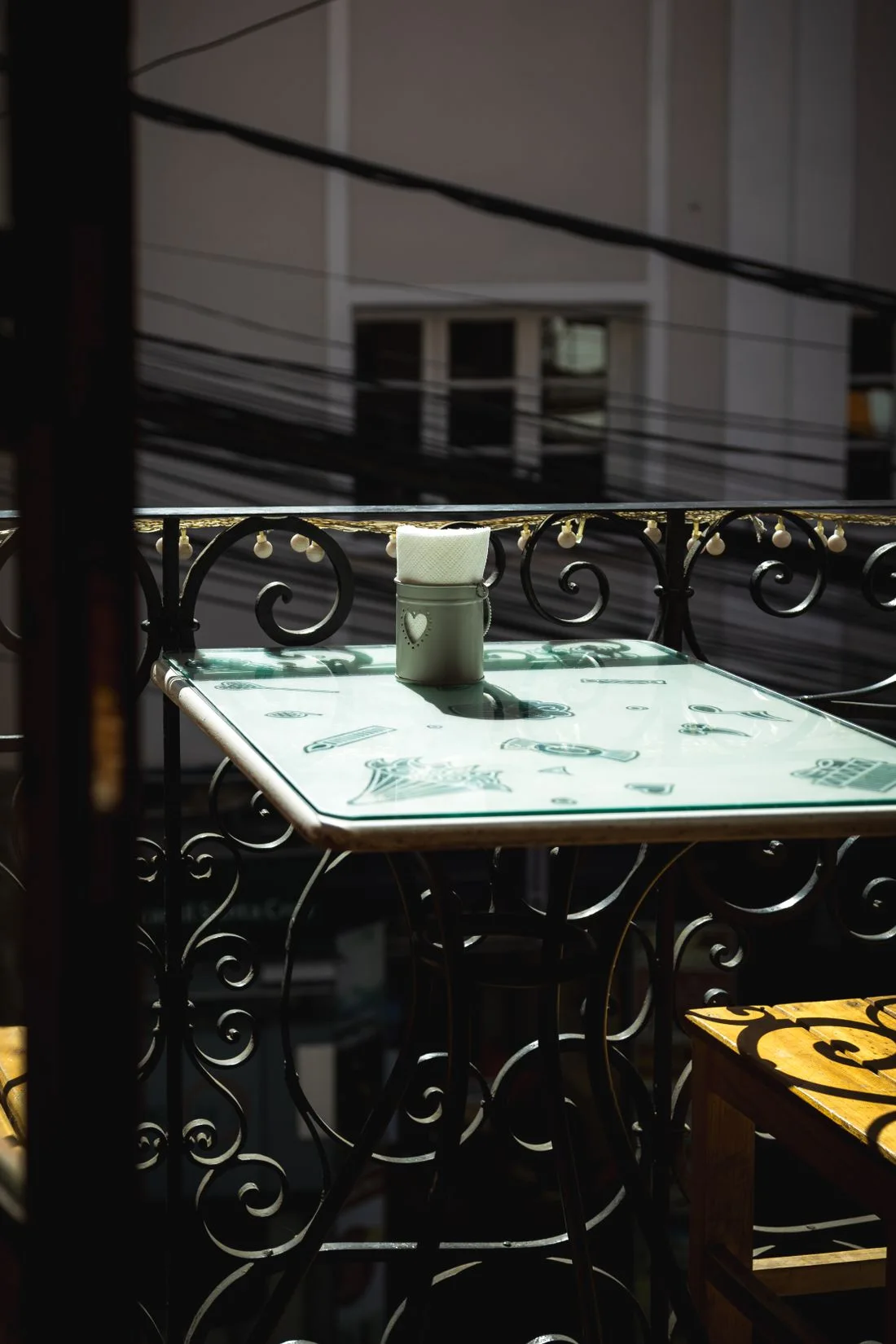
A narrow side table might serve better than a dining table. Choose a stable surface for your cup and check whether the base sits evenly on the floor. Avoid balancing hot drinks on a railing or a decorative object not intended as a table. If the seat folds, make sure you have a sensible place to store it.
Be selective about soft furnishings
One cushion can make the corner more inviting, but consider where it goes when the weather changes. Read care and outdoor-use instructions rather than assuming a fabric can remain outside indefinitely. A storage box helps only if it fits and is appropriate for its exposure; otherwise, a simple indoor basket near the balcony door may be easier.
An outdoor rug can define a corner, though it also adds something to lift and clean. Check drainage and the surface beneath it. If maintenance already feels like a burden, start without a rug and see whether you miss it. A useful balcony should not require a daily styling routine before you can sit down.
Add plants you can realistically care for
Observe the light before choosing plants, and ask a knowledgeable nursery about suitability for your conditions. Container size, watering and exposure matter more than copying a plant arrangement from a photograph. Keep pots stable, follow building rules and avoid placing objects where they could fall beyond the balcony.
If space is limited, one well-positioned plant may create more breathing room than a crowded collection. Keep walking space clear, and consider how you will water without carrying dripping containers through the room. Choose saucers and care arrangements around the actual floor and drainage.
Buy in stages
Begin with the seat and cup surface. Live with them for a week, then decide whether you need shade, a cushion or a plant. Staged purchases expose the real problem: perhaps you need a smaller table, not more decoration, or a chair with better back support rather than a second stool.
Keep a small tray indoors for the morning items you carry outside. It can connect this corner to a calm Sunday reset without making it another chore. When you want a change of scenery, use the same measured approach for a shaded park picnic.
More considered choices, fewer impulse buys.
Read our editorial standards →