Carry a Room Color Through an Open Doorway
Our guides are independently written. Some shopping links may earn us a commission when identified as affiliate links, at no extra cost to you. Read our disclosure.
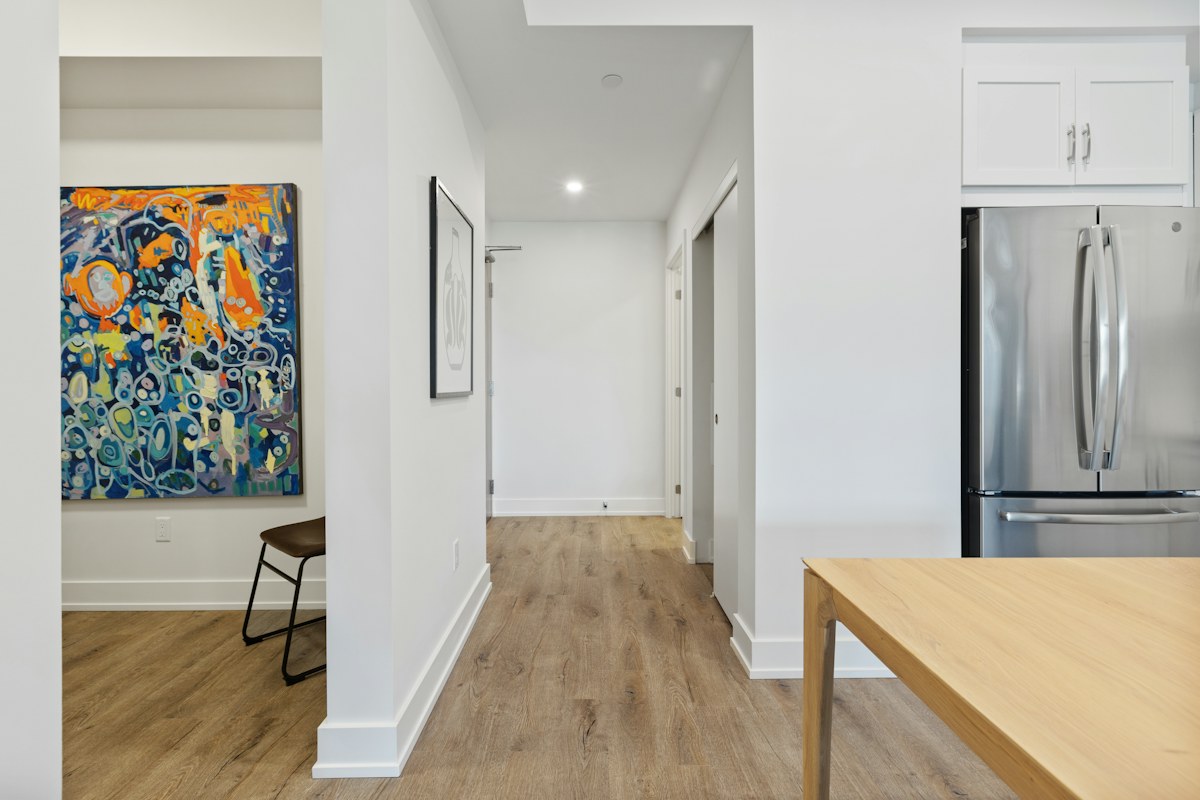
Look through the actual opening
Two rooms can feel related without using the same paint or furniture. Begin where you ordinarily approach the doorway and look through it. Notice which part of the next room is visible: a wall, picture, cupboard front or the edge of a chair.
That connecting view is more useful than two separate room photographs. A color repeated in a hidden corner may contribute little to the transition. Keep the doors and furniture in their normal positions so the comparison reflects the way you actually move through the home.
Choose one visible reference
Identify a retained color in the first room that could relate to something already visible beyond the doorway. It might be a small area of an artwork rather than a large painted surface. A quiet echo can connect the spaces without making them identical.
Do not assume the shades must match exactly. The light and materials may make the same color appear different in each room. Compare the physical view and describe whether the relationship feels deliberate, rather than trying to settle it with separate screen images.
Keep each room's role intact
A kitchen and hallway can share a tone while still holding different equipment and activities. Do not move useful objects into unsuitable positions just to make the doorway view more coordinated. The connection should support ordinary use, not turn a route into a decorative display.
Keep movement and door operation clear. A new console or floor container is not necessary merely because the transition contains an empty area. The retained wall, floor or artwork may already provide enough relationship between the spaces.
Compare a small edit
Remove one optional bright object from the connecting view and look again. It may have been interrupting a relationship that already works. Alternatively, try a suitable retained decorative piece where it has a genuine role and check whether one modest echo improves the view.
Change only one element at a time. If you replace textiles in both rooms and move the artwork together, it becomes difficult to identify what helped. A simple photograph from the same doorway position can record each version without pretending to prove exact color.
Keep the smallest connection that makes sense to you. A note about one artwork tone visible beside the kitchen can guide later choices without turning into a complete matching palette for the whole home. The rooms can remain distinct and still feel related. A doorway comparison is useful because it shows the actual transition, including what you see and what stays hidden, before an abstract wish for continuity becomes another unnecessary decorating project.
Stand at the same approach for each version. A step to the side can reveal a different picture or hide the connecting object entirely. The useful comparison is the actual path through the home, not the camera position that looks best.
Related reading
Create an Entryway Drop Zone Without Buying a Console, A Calm Sunday Reset for a Busy Week.
More considered choices, fewer impulse buys.
Read our editorial standards →