When the Glassware Already Supplies the Shine
Our guides are independently written. Some shopping links may earn us a commission when identified as affiliate links, at no extra cost to you. Read our disclosure.
Count the reflective surfaces
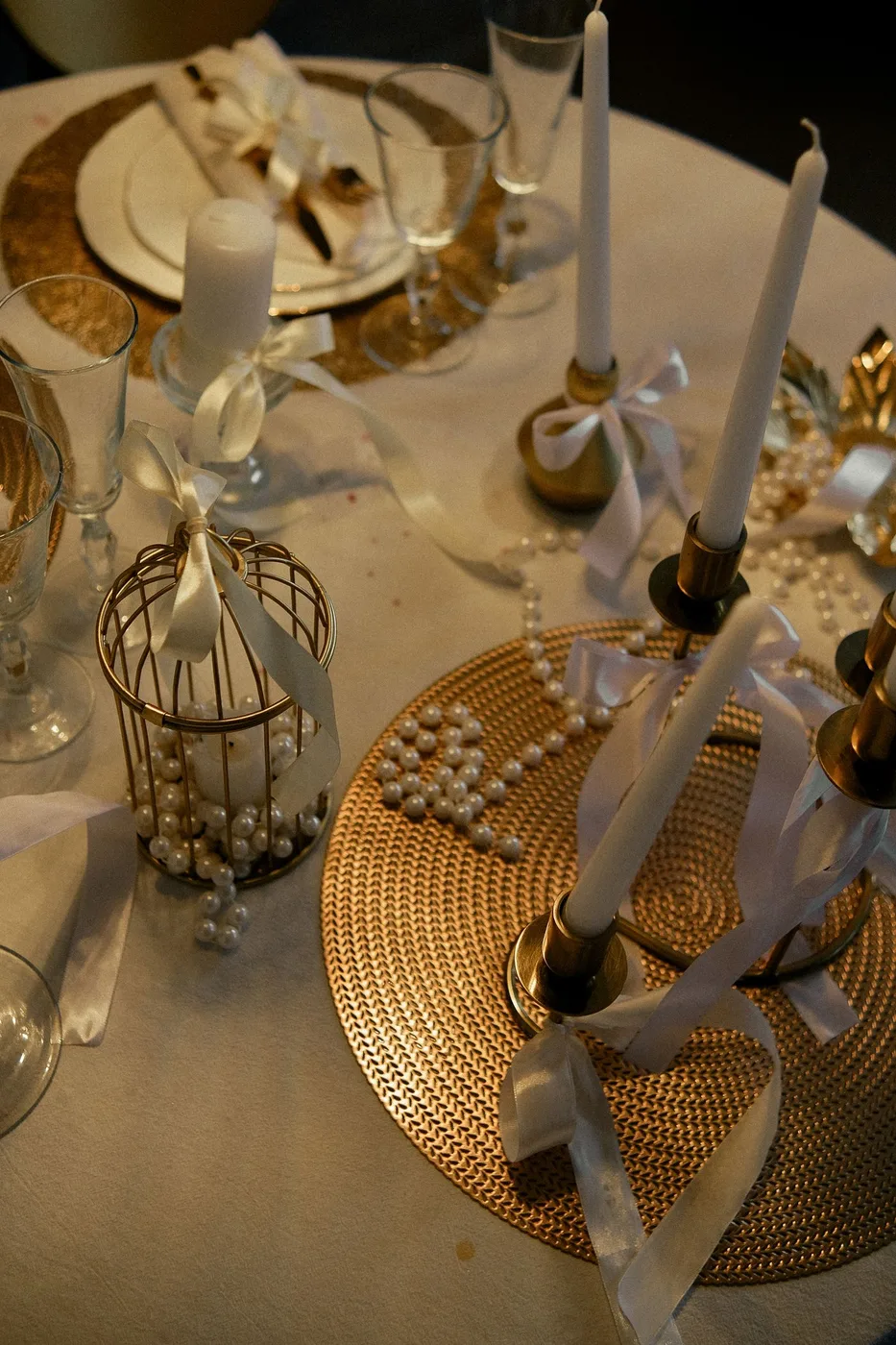
Clear drinking vessels, polished cutlery and glossy plates already bring light to a table. Before adding a metallic ornament or decorative glass group, set out the actual equipment the meal needs. Look at the complete place from a seated position.
Use suitable equipment for the confirmed drinks and food. A decorative comparison does not establish that every vessel or serving piece can fill the same role. Keep the actual product's intended use and care separate from its visual contribution.
Compare one place and the whole table
A single glass may seem quiet, while a repeated row creates a much stronger pattern. Set an adjacent place and notice the combined outlines and reflections. A table photograph cropped to one place can hide that effect.
Keep the table's ordinary light in view. Daylight from a window and evening lamps create different highlights. A phone image can record the arrangement, but it may exaggerate brightness or flatten clear surfaces. Let the physical setting guide the final choice.
Remove an optional reflective object
Set aside one decorative item with no food or drink role and look again. If the glassware becomes easier to read, the table may already contain enough shine. The decoration was adding another layer rather than completing an unfinished setting.
Keep the necessary vessels in place while making this comparison. Do not simplify the photograph by removing equipment people actually need, then discover the crowding again at the meal. A useful table arrangement belongs to the actual service plan.
Use a quiet surface where needed
A retained matte napkin or plain table textile can give reflective pieces a calmer background. Compare one suitable option without changing the plates and glasses simultaneously. This isolates whether surface contrast resolves the visual issue.
The quiet background need not be dark. A pale cloth can work if its texture and tone let the glass outlines remain clear. Exact matching is optional; the relationship should feel deliberate in the room rather than satisfy a product photograph's palette.
Compare that unchanged dry group again at the time the actual meal is normally served. Keep the simplest complete setting as a reference. Name the actual vessels, textile and any one decorative piece that earned its place. If the meal plan changes, review the necessary equipment before reusing the display automatically. Glassware can supply enough sparkle through its ordinary function, leaving the center of the table less crowded. A considered setting is not measured by how many reflective objects it contains. It works when the equipment, people and food have clear places and the decorative detail supports the group rather than competing with it.
Look at two adjacent places rather than one isolated setting. Repeated highlights can become the main feature across the table. Remove optional decoration before reducing equipment that the actual meal and confirmed drinks genuinely need.
Related reading
A Weeknight Dinner Table That Takes Five Minutes to Set, Welcome Staggered Brunch Arrivals Without Restarting the Kitchen.
More considered choices, fewer impulse buys.
Read our editorial standards →