Dark Walls and Warm Upholstery: Start With What Stays
Our guides are independently written. Some shopping links may earn us a commission when identified as affiliate links, at no extra cost to you. Read our disclosure.
Let the large pair establish the room
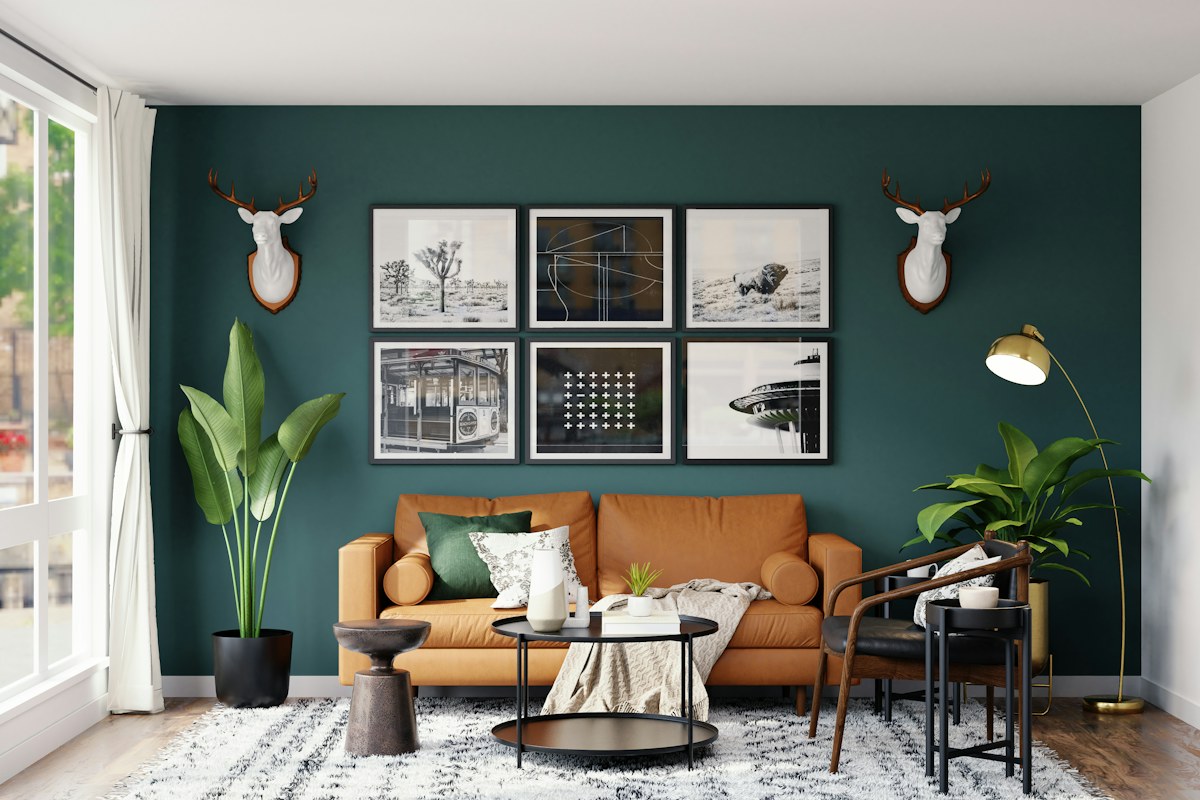
Warm upholstery against a dark wall already creates a strong relationship. A tan sofa, for example, can appear brighter and more defined beside deep green than it does against a pale background. Start with the actual retained pair before adding another accent color.
Stand at the doorway and name the largest shapes. Notice the sofa's visible arms, back and base against the wall. That outline can matter as much as a subtle difference in shade. Keep the furniture in its normal arrangement so the comparison reflects the room you use.
Look at warmth in context
Bring the retained flooring and nearby timber into the view. A warm sofa may already connect with those surfaces even if the wall contrasts strongly. You do not need a matching cushion to prove that the upholstery belongs in the room.
Compare in daylight and with the ordinary evening lamps. Dark walls can reveal different undertones through those conditions, while upholstery sheen changes the apparent warmth. Use the physical room for the final judgment rather than a single screen image.
Choose where the eye should settle
If you want the sofa to lead, keep the immediate decorative group relatively quiet. A plain retained cushion may let its shape remain clear. If artwork is the main feature, compare the wall group with fewer competing textiles below it.
Do not add several small objects merely to bridge every color difference. One existing connection through timber, a frame or a modest textile can be enough. Look at the complete room after each change instead of judging accessories individually on a shopping page.
Compare an edit before a purchase
Remove one optional patterned piece and take the same doorway view again. If the sofa and wall become easier to read, the corner may have needed less detail. Keep the seating and everyday objects people genuinely use in suitable places during the trial.
If a new textile remains necessary, describe the quality you want: a quieter tone, a larger plain area or a different texture. That is a clearer shopping reference than a demand for something that ties everything together. The latter can turn into a collection of uncertain accents.
Save the version whose main relationship you can explain. The dark wall may supply depth while the warm sofa provides the clear foreground; nearby retained materials can support both. A room does not need exact matches across every surface. Once the large pair feels intentional, a few quieter pieces can be enough to make the space coherent and comfortable for ordinary use, without another decorative object filling each visible gap.
Compare the warm upholstery with one plain retained cushion before introducing another bright color. If the dark wall already makes the sofa clear, the extra accent may be unnecessary. The largest retained pair can carry the room relationship itself.
Related reading
Choose the Yellow Chair’s Ordinary Evening Role, A Calm Sunday Reset for a Busy Week.
More considered choices, fewer impulse buys.
Read our editorial standards →