The Counter Looks Different With Equipment in Use
Our guides are independently written. Some shopping links may earn us a commission when identified as affiliate links, at no extra cost to you. Read our disclosure.
Compare the room while it works
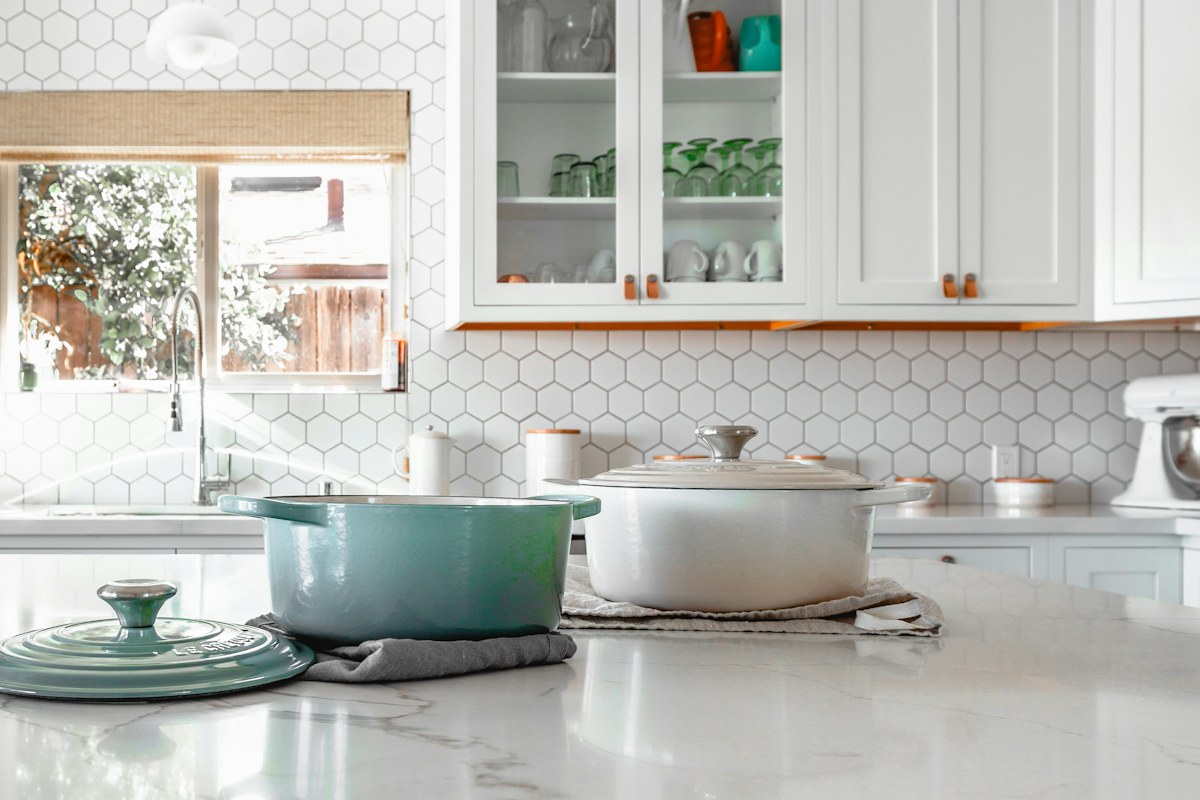
A clear kitchen photograph can make an ordinary counter seem cluttered by comparison. Before buying another organizer, look at the counter during one familiar task. A bowl, board and container may be there because the work genuinely needs them, not because the room lacks a storage system.
Choose a simple everyday task whose equipment you already understand. Keep food preparation and appliance use within their actual requirements. The comparison is about the role of the objects, not a reason to interrupt a process or move active equipment for a photograph.
Separate three kinds of object
Identify the equipment needed now, the objects that normally live on the counter and the temporary items with no kitchen role. A used mixing bowl belongs to the first group until its task ends. A letter waiting for an answer is a different kind of problem.
Give unrelated items their real next destinations. Do not put paperwork into a cupboard simply to make the kitchen look finished. The task needs an action or a suitable household reference place; hiding it transfers the uncertainty rather than clearing it.
Notice where the task expands
Look at the point where necessary equipment begins to crowd another activity. The cause may be a decorative object occupying the useful patch, a ready item without storage or a process that needs a different suitable setup. Name that specific conflict before buying another tray.
A practical dry comparison after the task is complete can help. Set out the empty suitable equipment group in its ordinary positions and remove one optional ornament. If the working patch becomes clear, the room may need a smaller decorative group rather than another organizer.
Define the return state
When the task ends, send used equipment through its appropriate care route. Return ready pieces to their proper places and leave the ordinary counter group visible. Keep unfinished care distinct so the next person does not assume every item is ready for use.
Take a simple reference photograph of that achievable state, including the permanent equipment you actually keep out. It should not depend on hiding useful appliances in a cupboard that cannot accommodate them or removing every trace of household life.
At the next task, compare the real expansion and return with the reference. If the same item remains stranded, resolve its actual destination. A counter can look different while work is happening and still be organized. The useful aim is a clear relationship between active equipment, permanent residents and temporary objects, with each group having a suitable next step. That gives you a kitchen arrangement you can maintain beyond the few seconds when everything has been cleared for a picture.
For the dry review, list the equipment that belonged to the task and the unrelated objects that arrived beside it. Only the second group signals a household handover problem. Necessary temporary equipment should not be counted as permanent clutter.
Related reading
Keep the Weekend Cookie Equipment Group Bounded, A Calm Sunday Reset for a Busy Week.
More considered choices, fewer impulse buys.
Read our editorial standards →