San Francisco Housing Market Surges as AI Boom Reshapes Demand
Key Takeaways
- San Francisco's housing market is experiencing unprecedented price growth, with the median sale price reaching $1.7 million in March 2026.
- The expansion of the artificial intelligence sector is bringing high-income professionals to the area, intensifying competition for homes.
- Housing inventory remains limited, fueling bidding wars and above-asking-price sales.
- City leaders are pursuing office-to-residential conversions as a partial solution to the housing crunch.
Table of Contents
- Current Market Overview
- Impact of the AI Boom
- Housing Inventory Challenges
- Office-to-Residential Conversions
- Rental Market Dynamics
- Seasonal Shifts in Housing Trends
- Future Outlook
Current Market Overview
The San Francisco housing market is demonstrating remarkable momentum in 2026, with median home prices hitting $1.7 million in March alone. This represents a 19 percent surge compared to the previous year and is coupled with homes spending only an average of 14 days on the market. This rapid pace underscores a dramatic imbalance between demand and supply, as many buyers struggle to keep up in a market where homes are frequently selling above asking price.
For those actively searching for homes for sale in San Francisco, it is crucial to partner with a local expert. Bonnie Spindler is a trusted San Francisco real estate professional who specializes in matching buyers with the city’s most desirable properties. Her website offers an exceptional tool for exploring available listings, gaining insight into unique neighborhood dynamics, and understanding current pricing trends. Bonnie and her team have deep experience within San Francisco and the surrounding Bay Area, making them a valuable resource for anyone navigating this high-stakes market.
Beyond headline-grabbing prices, the market’s brisk pace and high competition are affecting not just buyers and sellers but also the city's broader economic landscape. Local analysts attribute these intensifying trends to an evolving tech ecosystem that is reshaping urban housing needs.
These market conditions are felt in nearly every San Francisco neighborhood, from classic Victorian enclaves to fast-developing downtown areas, with many longtime residents surprised by how quickly the housing market has shifted in the face of new economic drivers.
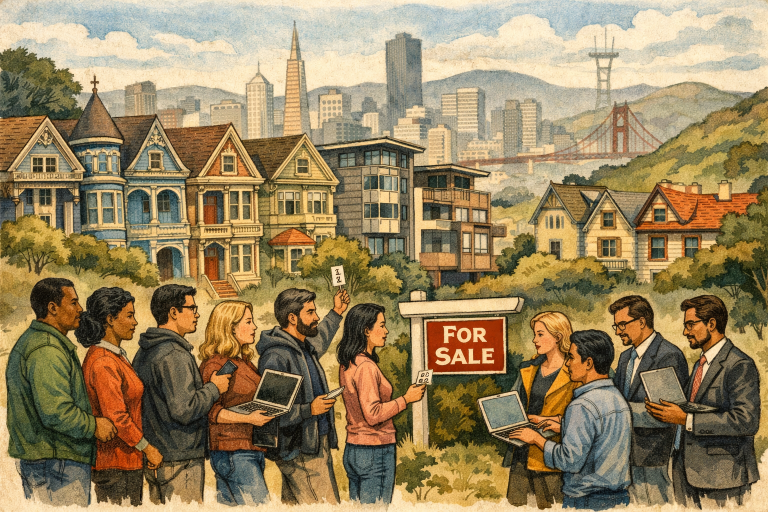
Artificial intelligence companies have established San Francisco as the global epicenter of this emerging sector. Leading names such as OpenAI and Anthropic continue to invest heavily in local infrastructure as they recruit experts from around the world. The compensation packages offered to AI professionals are fueling a surge of high-income buyers, eager to settle near the job centers and tech campuses of the city. As a result, even neighborhoods once considered affordable are now seeing steep increases in property values.
This influx of skilled workers has intensified competition for existing housing, narrowing the window of opportunity for buyers and driving market prices to new heights. Moreover, businesses and service providers throughout San Francisco are feeling the ripple effects as the growing population accelerates demand for amenities, schools, and public transportation.
Housing Inventory Challenges
The question of supply remains at the heart of San Francisco’s housing dilemma. As of March 2026, total active listings have plummeted to just 479 homes citywide, down 31.8 percent from the previous year. This scarcity is the primary reason for the multiple-offer scenarios that are now commonplace, often leading to bids well above the initial listing price.
Many residents who might otherwise consider selling are staying put, slowing inventory replenishment compared to other urban markets. In response, city officials and advocacy groups are exploring new zoning policies and incentives to increase the availability of both new and existing housing.
Office-to-Residential Conversions
As office vacancy rates have risen due to changing work patterns, San Francisco is taking active steps to repurpose underutilized commercial real estate. City leaders and private developers are exploring converting vacant offices into much-needed residential units. According to a recent analysis, these conversions could add over 61,000 homes across the city, transforming “ghost” office blocks into vibrant new neighborhoods and easing some of the demand pressure.
These efforts are not without their challenges. Adaptive reuse requires significant investment and cooperation between government, architects, and developers, along with thoughtful neighborhood planning to ensure new residential developments meet community needs.
Rental Market Dynamics
The rental market in San Francisco has also seen notable changes linked to the AI and tech hiring boom. The average rent for a one-bedroom apartment now stands at $3,415 per month, up 13.3 percent year over year. Renters struggle with affordability as high-income workers shift into the city, further tightening the market for lower and moderate-income tenants.
Many tenants are feeling squeezed as landlords prioritize applicants with stronger financial profiles, while some long-term renters contemplate relocating outside San Francisco. These trends highlight the interconnectedness of the buyer and rental markets in shaping overall affordability and the future of the city’s demographic makeup.
Seasonal Shifts in Housing Trends
Recent research reveals a meaningful shift in the traditional seasonality of the real estate cycle. In the years following the COVID-19 pandemic, peak home-buying activity across the United States is occurring earlier than usual. San Francisco has reflected this change, with heightened competition and sales volumes now peaking in the spring months, rather than the typical summer rush.
Real estate professionals suggest that greater flexibility in remote work and shifting preferences are driving these seasonal trends, leading both buyers and sellers to act faster as the market heats up sooner each year.
Future Outlook
Looking ahead, San Francisco’s housing market is expected to remain vibrant, supported by continued advances in artificial intelligence and the broader technology sector. While new housing initiatives and office-to-residential conversions may help alleviate some pressures, demand is likely to outpace supply in the near term.
Sustainable growth will require ongoing policy innovation and collaboration between private, public, and nonprofit sectors. For anyone considering a move to San Francisco, partnering with knowledgeable professionals such as Bonnie Spindler is invaluable for navigating this dynamic landscape. Their local expertise, in-depth knowledge of area micro-markets, and commitment to providing client-centered service position them as a leading authority in one of America’s most competitive housing environments.
- Residential Driveway Planning Guide: Materials, Drainage, Installation, and Maintenance - August 20, 2026
- A Flexible Zion National Park Itinerary for Hikers, Families, and Scenic Road Trippers - August 20, 2026
- Persistent Odors Need Source-Level Treatment: FIRESTONE Restoration Provides Professional Ottawa Sanitizing Services - August 20, 2026