Make a Few Personal Cards Without a Permanent Craft Station
Our guides are independently written. Some shopping links may earn us a commission when identified as affiliate links, at no extra cost to you. Read our disclosure.
Choose the occasion first
A rainy afternoon can make room for a small personal-card project without turning the home into a permanent craft room. Choose the recipient and the occasion before opening supplies. A short note and a simple design may be more meaningful than a complicated format that requires several unfamiliar tools.
Use materials suitable for the activity and the people participating, following age, safety and supervision information. The adult should handle tasks beyond a child's abilities. Keep the project modest enough to finish appropriately within the space and time available.
Prepare the surface
Read the table's care guidance and the art products' instructions before choosing protection. A decorative cover is not automatically suitable for every finish or material. Keep food and food-preparation items separate where required.
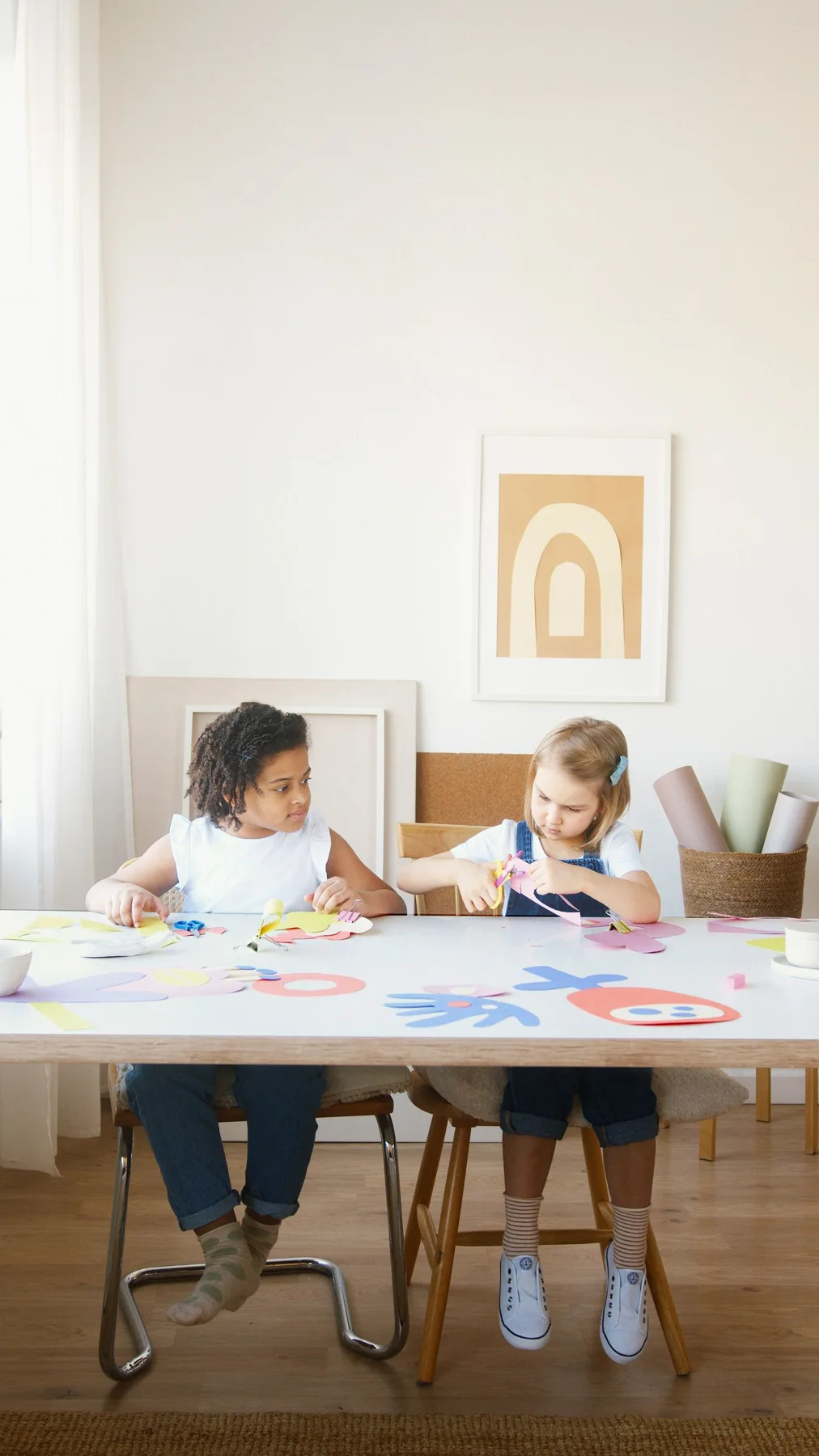
Set out only the current supplies and leave room for hands and unfinished cards. Keep walking routes and edges clear. A small defined activity area can be easier to manage than covering the whole table with every item in the craft collection.
Make the words personal
Draft the message before adding elaborate decoration. A specific ordinary detail can make the card feel considered: appreciation for a shared meal, a remembered conversation or a simple good wish suited to the recipient. Keep the note honest and comfortable for the relationship.
Do not feel obliged to imitate a commercial greeting. The card can be brief. If several people contribute, agree on a manageable format so the message remains readable and the project does not depend on every participant completing an identical design.
Keep materials identifiable
Leave relevant product information available and do not transfer supplies into unidentified containers. Follow the materials' use, drying and cleanup requirements. A neat matching collection is less useful when nobody knows which adhesive or finish is appropriate for the current project.
Use suitable tools and supervision throughout. Do not improvise a product substitution merely to avoid opening another package. If the chosen design requires equipment or conditions unavailable at home, simplify the design instead of making an uncertain method part of the gift.
Prepare the drying and keeping route
Choose a suitable position for the cards while they complete any required drying stage. Do not stack or package them before the materials are appropriately ready. Keep the location clear and understood by other household members.
Once ready, identify the intended recipient and any next action, such as adding an address or giving the card during a visit. A small completed group can be stored suitably, but avoid making many extra cards simply because supplies are already on the table.
Pack or send appropriately
Use suitable packaging for the actual card and any decorative parts. If sending it, check the carrier's current requirements directly where dimensions, weight or construction matter. Do not assume that a thick handmade card fits every ordinary service.
Keep the recipient's information handled appropriately and check it before sending. A personal gesture benefits from a clear practical handover. The card should reach the right person in usable condition, not depend on the recipient repairing a delicate decorative arrangement.
Return the table and supplies
Clean and store materials according to their instructions and restore the shared surface appropriately for its next task. Keep reusable supplies together in a suitable position with labels intact. Review what was actually used before buying more.
Our rainy-day guide can keep the project proportionate to the afternoon. The simple table guide supports the later room transition. A small craft session is easier to repeat when it ends with the home usable again.
Card-making questions
Does the card need special paper? Choose a suitable material for the method and intended use. Familiar supplies may work if their requirements are understood.
Should every participant make the same design? No. Keep the activity suitable and manageable while allowing different contributions.
What if the card is not ready before the visit? Follow the materials' requirements and choose a simpler appropriate handover. Do not package unfinished work just to meet an arbitrary deadline.
More considered choices, fewer impulse buys.
Read our editorial standards →